
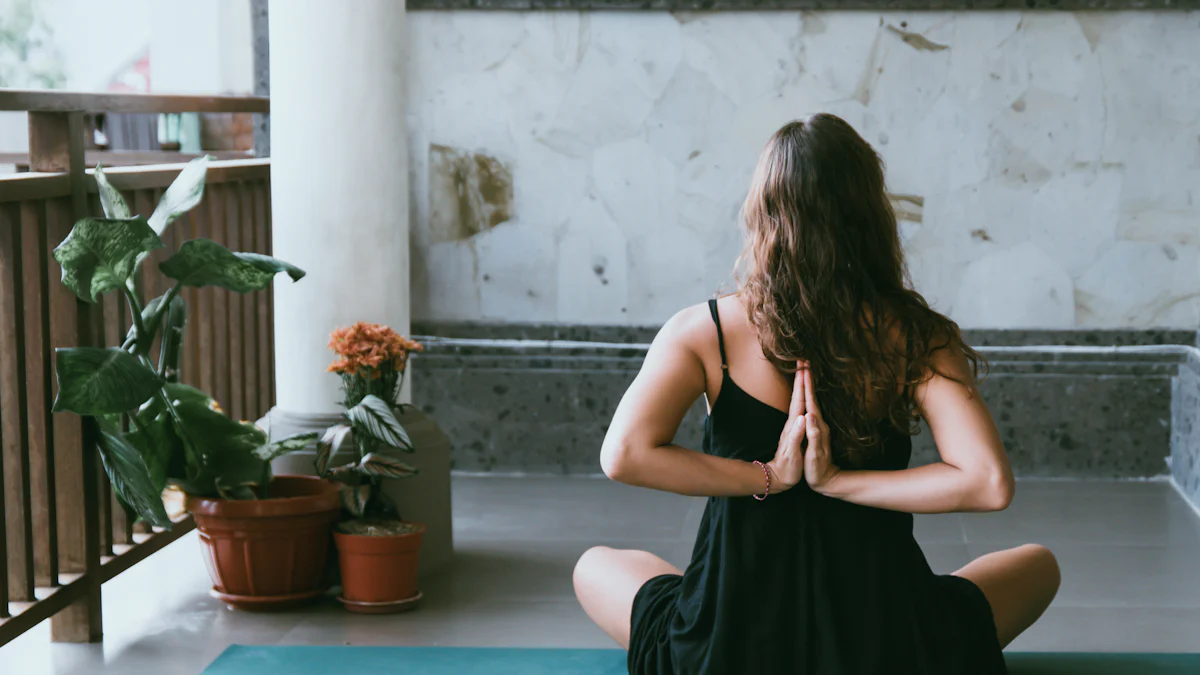
Image Source: unsplash
Yin & Yoga offers a unique and profound approach to yoga practice. You will find a path to serenity and balance, essential for physical and mental well-being. Studies show that yin yoga reduces stress and improves flexibility, providing a feeling of deep relaxation. This guide aims to present the benefits of this practice, helping you integrate yin yoga into your daily routine to improve your health and quality of life.
What is Yin Yoga?
History and Origin
Yin Yoga is a relatively modern practice, developed in the 1970s by Paul Grilley. He was inspired by traditional yoga practices and Chinese philosophy. This form of yoga evolved from Hatha Yoga and Chinese Taoist practices. Yin Yoga stands out for its passive and meditative style, which contrasts with the more dynamic forms of yoga.
Development of Yin Yoga
The development of Yin Yoga was influenced by a combination of Eastern traditions. Grilley incorporated elements of Taoism, which emphasizes the balance between yin and yang energies. Yin Yoga focuses on passive and receptive aspects, allowing you to explore a more introspective and meditative practice. This approach helps prepare the body for meditation, cultivating a sense of inner peace and stillness.
Cultural Influences
The cultural influences of Yin Yoga are profound. The practice is rooted in ancient Chinese philosophies, which emphasize the importance of energy balance. Yin Yoga aims to improve the flow of chi, or vital force, contributing to overall health and vitality. This practice has gained popularity among those seeking a more meditative and relaxing experience, providing a space for introspection and self-knowledge.
Basic Principles
Yin Yoga is distinguished by its unique approach, which focuses on passive postures and maintaining these postures for extended periods. This practice allows muscles to relax completely, while connective tissues, such as fascia, ligaments, and tendons, are gently stretched.
Postures and Techniques
The postures in Yin Yoga are designed to be held for three to five minutes, or even longer. During this time, you effortlessly settle into a pose, often supported by props such as cushions. This technique helps minimize muscle activity, allowing the body to focus on stretching connective tissues. Yin Yoga is ideal for increasing flexibility and is often used to complement a regular yoga practice.
Philosophy Behind Yin Yoga
The philosophy of Yin Yoga is deeply connected to the principles of Yin Yang. Yin represents the passive, receptive, and nurturing aspects of life. By practicing Yin Yoga, you cultivate a deeper connection with these aspects, promoting inner balance. This practice not only improves physical flexibility but also promotes a state of calm and clarity of mind. Yin Yoga is an excellent way to reduce stress and improve mental health, providing a space for reflection and relaxation.
Physical Benefits of Yin Yoga

Image Source: pexels
Yin Yoga offers a range of physical benefits that can transform your yoga practice and improve your overall health. By focusing on passive postures and holding them for extended periods, you can experience significant improvements in flexibility, mobility, and connective tissue health.
Flexibility and Mobility
Increased Flexibility
Practicing yin & yoga regularly can noticeably increase your flexibility. The postures are designed to gently stretch muscles and connective tissues, allowing you to achieve a greater range of motion. Studies show that this practice helps release accumulated tension, promoting a looser and more agile body.
Improved Joint Mobility
In addition to increasing flexibility, yin & yoga also improves joint mobility. By holding postures for longer, you stimulate the joints, which can result in better lubrication and joint health. This is especially beneficial for those seeking to prevent or alleviate joint pain.
Connective Tissue Health
Strengthening Ligaments
Yin & yoga focuses on deep connective tissues, such as ligaments and fascia, which are often neglected in more dynamic practices. By stretching these tissues, you strengthen the ligaments, making them more resilient and less prone to injury. This practice is an excellent way to complement other physical activities.
Tissue Regeneration
Regular practice of yin yoga also promotes tissue regeneration. By stimulating blood flow and circulation, you help nourish and repair damaged tissues. This can result in less muscle pain and tension, as well as faster recovery after intense exercise.
"Practicing yin yoga regularly can bring a number of benefits to the body and mind, including [increased flexibility], [stress reduction] and anxiety reduction, improved blood circulation and joint health, and increased body awareness." - Various studies
Yin yoga not only improves your physical health but also provides a feeling of deep relaxation and well-being. By integrating this practice into your routine, you can experience a positive transformation in your life.
Mental and Emotional Benefits

Image Source: pexels
Yin yoga not only transforms the body but also offers significant benefits for the mind and emotions. By integrating this practice into your routine, you can experience a noticeable reduction in stress and an increase in concentration.
Stress Reduction
Stress is an unavoidable part of modern life, but yin yoga can be a powerful tool to combat it. By holding postures for extended periods, you allow yourself to deeply relax, which helps calm the mind and reduce anxiety.
Relaxation Techniques
During yin yoga practice, you focus on breathing and relaxation techniques that promote a state of calm. These techniques help slow the heart rate and lower blood pressure, creating a sense of tranquility. Regular practice can lead to a significant reduction in stress and anxiety levels.
Impact on Mental Health
The impact of yin yoga on mental health is profound. Studies indicate that this practice can reduce symptoms of depression and insomnia. By promoting introspection and mindfulness, Yin Yoga strengthens the connection between body and mind, allowing you to develop greater emotional awareness. This results in improved mood and overall well-being.
"The practice of Yin Yoga can have a [significant impact on mental health]. By promoting relaxation and introspection, Yin Yoga helps reduce stress and anxiety levels." - Various studies
Increased Concentration
In addition to reducing stress, Yin Yoga also improves concentration. The practice encourages you to turn inward, promoting a state of mindfulness that is essential for mental focus.
Mindfulness Practices
Yin Yoga incorporates mindfulness practices that help increase mental clarity. By focusing on your breath and bodily sensations, you learn to be present in the moment. This not only improves concentration but also promotes a sense of balance and equanimity.
Focus and Mental Clarity
With regular practice of yin & yoga, you can experience increased focus and mental clarity. The ability to maintain attention on a specific task improves, making it easier to face daily challenges with confidence and calm. This mental clarity is one of the many benefits that make yin & yoga a valuable practice for mental and emotional health.
How to Start Yin Yoga Practice
Starting yin & yoga practice can be a transformative experience. This style of yoga is accessible to everyone, regardless of experience level. Here are some valuable tips to help you begin your yin & yoga journey.
Tips for Beginners
Choosing the Environment
The environment where you practice yin & yoga is crucial for a relaxing and effective experience. Choose a quiet space where you can concentrate without interruptions. Soft lighting and a comfortable temperature help create a welcoming environment. You can add elements like candles or soft music to enhance the feeling of calm.
Necessary Equipment
To practice yin & yoga, you don't need much equipment. A yoga mat is essential for comfort and safety. Cushions, blocks, and blankets can be helpful for supporting the body in longer poses. These props help maintain proper alignment and avoid unnecessary strain. Be sure to wear comfortable clothing that allows freedom of movement.
Sessions and Routines
Structure of a Typical Session
A typical yin & yoga session begins with a brief moment of meditation to calm the mind. Then, you move into a series of passive poses, holding each for three to five minutes. During this time, focus on your breathing and allow your muscles to relax completely. Conclude the session with a deep meditation or relaxation, known as Savasana, to integrate the benefits of the practice.
Recommended Frequency
To reap the benefits of yin & yoga, practice regularly. Start with two to three sessions per week and increase as you feel comfortable. Regular practice helps improve flexibility, mobility, and mental health. As mentioned by beginners, yin & yoga is a great starting point for those who wish to delve into the depths of yoga. The slow and sustained practice facilitates understanding of the sequences and benefits.
"Yin yoga is a great starting point for those who want to gradually delve into the rich depths of yoga. Because it is done slowly and the asanas are held for longer, it is easier for beginners to pick up sequences and follow them than a fast-paced Vinyasa Yoga practice."
By following these guidelines, you will be well prepared to begin your yin & yoga practice. Remember that consistency is key to experiencing the full benefits of this transformative practice.
FAQs about Yin Yoga
Common Questions
Who can practice Yin Yoga?
You may wonder if yin & yoga is right for you. The good news is that this practice is accessible to almost everyone. Regardless of age or experience level, yin & yoga offers significant benefits. People with physical limitations or those seeking a gentler practice will find yin & yoga an excellent option. The practice emphasizes stillness and introspection, allowing you to connect deeply with your emotions and bodily sensations. This promotes self-awareness that benefits both mind and body.
"Yin Yoga benefits the mind and body, promoting mental clarity, release of deep tensions, and openness to healthier mental well-being."
Differences between Yin Yoga and other styles
You may wonder how Yin Yoga differs from other styles of yoga. Unlike more dynamic practices such as Vinyasa or Ashtanga, Yin & Yoga focuses on passive postures held for extended periods. This approach allows the muscles to relax completely while the connective tissues are gently stretched. Yin & Yoga is a form of meditation that provides therapeutic effects similar to acupuncture, promoting deep relaxation and stress reduction.
Yin & Yoga also stands out for its emphasis on stillness and introspection. During practice, breathing plays a fundamental role in maintaining calm and focus. This strengthens the connection between body and mind, contributing to improved mood and overall well-being. If you are looking for a practice that offers deep relaxation and access to the deeper layers of the body, yin yoga is an ideal choice.
"Yin Yoga is a slow and deep practice, excellent for reducing stress, increasing relaxation and deepening awareness of the body and mind."
Yin Yoga offers a number of significant benefits for physical and mental health. By practicing regularly, you may experience:
-
Increased flexibility and improved joint health.
-
Reduced stress and anxiety, promoting a state of deep relaxation.
-
Improved blood circulation and tissue regeneration.
We encourage you to integrate Yin Yoga into your daily routine. This practice not only improves physical health but also promotes greater body and mind awareness. By adopting Yin Yoga, you invest in a more balanced and healthy lifestyle.
See also
Complete Guide for Male Beginners in Yoga Practice
Essential Tips for Selecting the Best Yoga Class
Everything You Need to Know to Start with Yoga Burn

Written by
Maria Yogalife
Maria | Yoga & Wellness Writer at YogaLife.World Maria is a passionate yoga and wellness writer at YogaLife.World, dedicated to sharing knowledge, inspiration, and practical guidance for a healthier, more balanced lifestyle. Through her articles, she explores yoga practices, meditation, mindfulness, holistic wellness, and the transformative benefits of mindful living. With an accessible and inspiring approach, Maria helps readers of all levels discover new practices, deepen their understanding of yoga, and bring greater balance, awareness, and well-being into their everyday lives.
Visit website


