
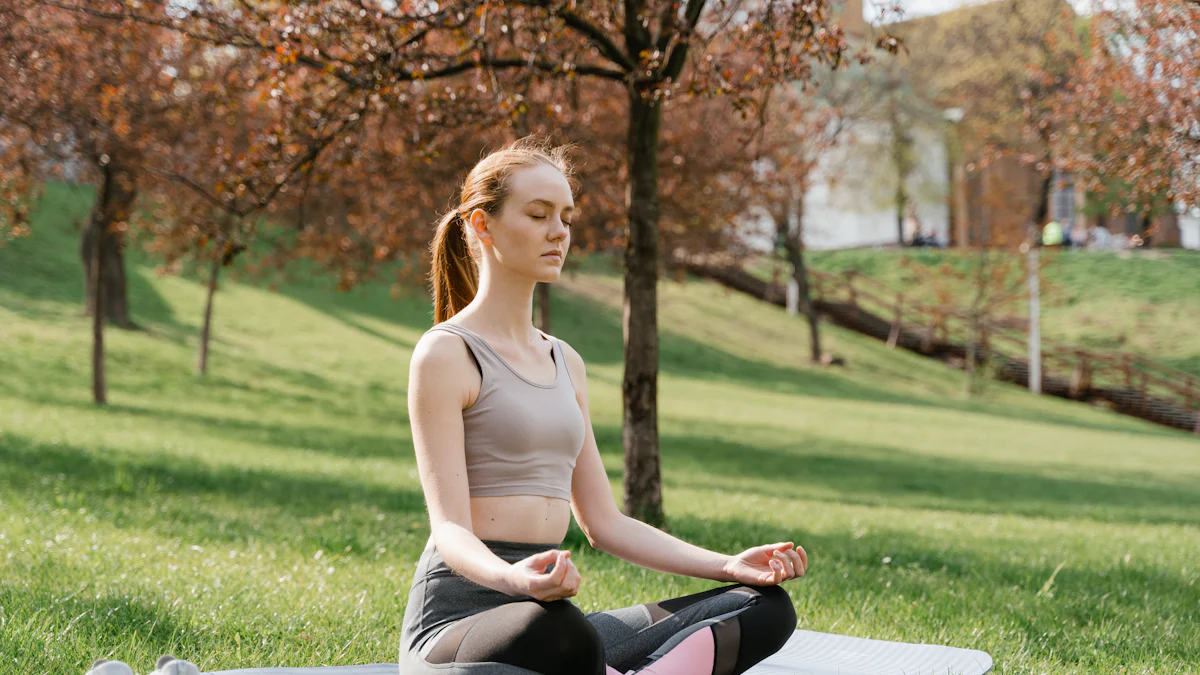
Understanding the role of Om in yoga
Understanding the Role of Om in Yoga
Image Source: pexels
Om is a central element of yoga, recognized for its profound spiritual significance. As a primordial mantra, it symbolizes the essence of the universe. You will discover that Om in yoga promotes a harmonious connection between mind, body, and soul. By chanting this sacred sound, you can experience increased relaxation and improved focus. The role of Om in yoga is essential for those seeking to deepen their practice and achieve a state of inner peace. By incorporating Om for yoga into your routine, you enrich your spiritual experience.
What is Om?
Image Source: unsplash
Origins and History of Om
The symbol Om, also written as "Aum" or "ॐ" in Sanskrit, has its roots in ancient Hindu scriptures, including the Vedas and the Upanishads. These sacred texts describe Om as the primordial sound, the one that gave birth to the universe. It encapsulates the essence of creation, preservation, and dissolution. In several Asian religions, particularly in India, Om is recognized as the pranava mantra, or "primordial mantra." This original sound is considered the source vibration of the beginning of the universe. Traditionally, Om is chanted at the beginning and end of yoga sessions to activate certain vibrations that surround us.
Spiritual and Symbolic Meaning of Om
Om has a profound spiritual meaning. It is considered one of the most sacred and powerful symbols in Hindu, Buddhist, and Jain traditions. By chanting Om, you connect with universal consciousness. This mantra promotes harmony between mind, body, and soul, creating a sense of unity and inner peace. Om also represents the division of time into three states: the waking state (A), the dreaming state (U), and the sleeping state (M). By integrating this sacred sound into your yoga practice, you enrich your spiritual experience and open yourself to a deeper dimension of your being.
How to Chant Om
Om Chanting Techniques
To chant Om effectively, it is essential to master certain techniques. Here are some tips to guide you:
Posture and Breathing
-
Posture: Sit comfortably in the lotus position or on a chair with your back straight. Keep your shoulders relaxed and your hands resting on your knees. This posture promotes good energy flow.
-
Breathing: Breathe deeply through your nose. Fill your lungs with air, then exhale slowly. Your breathing should be calm and steady, which helps prepare your mind and body for chanting Om.
Pronunciation and Intonation
-
Pronunciation: Om is pronounced in three distinct parts: "A," "U," and "M." Begin with an open "A," move to a more closed "U," and end with a vibrant "M." Each sound should be sustained equally.
-
Intonation: Maintain a soft, continuous intonation. Allow the vibrations to resonate throughout your body. This creates a feeling of calm and harmony.
Physical and Psychological Effects of Chanting Om
Chanting Om is not limited to a simple vocal practice. The beneficial effects on the body and mind are numerous:
-
Relaxation and mental clarity: Chanting Om increases alpha brainwaves, associated with relaxation and mental clarity. You will experience inner peace and increased concentration.
-
Activation of the parasympathetic nervous system: This practice helps regulate breathing and activate the parasympathetic nervous system, thus reducing stress and anxiety.
-
Physical well-being: The vibrations of Om promote blood circulation and improve digestion. They also strengthen the vocal cords and help keep the sinuses open.
-
Inner Harmony: By chanting Om, you activate and balance the body's energy centers, contributing to a sense of balance and overall well-being.
"Chanting Om calms the mind, soothes the body, strengthens and relaxes the respiratory system, slows the heart rate, and calms, contributing to an overall rebalancing effect."
By integrating these techniques and understanding the effects of chanting Om, you enrich your yoga practice and foster a deeper connection with yourself.
The Benefits of Om in Yoga
Image Source: unsplash
Effects on the Body
Relaxation and Stress Reduction
By incorporating Om into your yoga practice, you can experience deep relaxation. Chanting Om helps release accumulated tension in the body. You will feel more relaxed and calm. The vibrations of Om act like an internal massage, soothing the nervous system. This practice reduces stress and promotes a state of tranquility. You can thus better manage stressful situations in daily life.
Improved Concentration
Om plays a crucial role in improving concentration. By chanting this mantra, you focus your mind on the sound and vibrations. This helps you eliminate mental distractions. You become more attentive and present in the moment. This increased focus translates into better performance in your daily activities. You may also notice an improvement in your memory and problem-solving abilities.
Effects on the Mind
Spiritual Awakening
The Om mantra in yoga is a powerful tool for spiritual awakening. By chanting this mantra, you connect to a deeper dimension of your being. You experience a sense of oneness with the universe and inner peace. This spiritual connection allows you to better understand your place in the world. You develop greater compassion and empathy for others. The Om mantra guides you toward a more fulfilling and meaningful life.
Harmonizing Energies
Chanting the Om mantra in yoga harmonizes the energies of your body. The vibrations of the Om mantra balance the energy centers, or chakras. You experience a smoother, more balanced flow of energy. This harmonization contributes to your overall well-being. You feel revitalized and full of vitality. By integrating Om into your daily practice, you promote optimal physical and mental health.
"Om for yoga creates a sense of unity and community, enhancing the benefits of yoga postures."
In conclusion, Om for yoga offers numerous benefits for both body and mind. By integrating it into your practice, you enrich your yoga experience and your daily life.
Integrating Om into Your Daily Practice
Tips for Regular Practice
To integrate Om into your daily routine, start by creating a dedicated space for your practice. Choose a quiet place where you can sit comfortably without distractions. Make sure this space is conducive to meditation and concentration.
-
Set a Regular Time: Choose a time of day when you can fully dedicate yourself to your practice. The morning, before starting your day, or the evening, before going to bed, are ideal times to chant Om.
-
Start with Short Sessions: If you are a beginner, start by chanting Om for five minutes. Gradually increase the duration as you feel more comfortable.
-
Use Visual or Audio Aids: You can use videos or audio recordings to guide you in your practice. These tools can help you maintain correct intonation and stay focused.
-
Be patient and persistent: Consistency is key to experiencing the benefits of Om. Don't get discouraged if you don't feel the effects immediately. Over time, you will notice an improvement in your overall well-being.
"Tips for finding your perfect OM chant - Yoga: Discover the power of OM in your yoga practice."
Combining Om with other yoga practices
Integrating Om into other yoga practices can enrich your experience and deepen your spiritual connection. Here are some suggestions for combining Om with other elements of yoga:
-
Before and after asanas: Chant Om before beginning your yoga postures to prepare your mind and body. End your session with Om to seal the benefits of your practice.
-
During meditation: Use Om as a focal point during your meditation sessions. This can help you calm your mind and achieve a state of deep relaxation.
-
While practicing pranayama: Combine chanting Om with breathing exercises to harmonize your vital energy. This can enhance the calming effect of pranayama and improve your concentration.
-
In a group: Participate in group Om chanting sessions to experience a stronger connection with other practitioners. This collective experience can intensify the vibrations and create a sense of unity.
By integrating Om into your daily practice, you not only enrich your yoga experience but also promote optimal physical and mental well-being.
Testimonials and personal experiences
Stories from yoga practitioners
In the world of yoga, many practitioners share inspiring stories about the impact of Om in their lives. Marie, a passionate yogi, recounts how chanting Om has helped her overcome periods of intense stress. She explains that each yoga session begins and ends with Om, creating a space of peace and serenity. For her, Om has become a sacred ritual that allows her to refocus and reconnect with herself.
Jean, another practitioner, discovered the power of Om during a yoga retreat. He remembers the collective energy felt when an entire group chanted Om in harmony. This experience strengthened his sense of belonging and connection with others. Jean affirms that Om has transformed his yoga practice, bringing him a spiritual depth he had never known before.
Impact of Om on their practice and their lives
Om is not limited to a simple vocal practice. Its impact goes far beyond yoga sessions. For many, Om becomes a powerful tool for improving concentration and calming the mind. Using the Om mantra during a meditation session can be beneficial for calming the mind and promoting concentration. This regular practice helps develop mental clarity and inner peace.
The vibrations of Om also have a harmonizing effect on the body and mind. Sophie, a yoga teacher, testifies that chanting Om has improved her physical and mental health. She experiences reduced stress and better emotional regulation. Om has allowed her to find balance in her daily life, enhancing her overall well-being.
By incorporating Om into your yoga practice, you too can discover these benefits. Whether it's to calm the mind, strengthen concentration, or harmonize energies, Om offers a multitude of possibilities to enrich your life.
Answers to Frequently Asked Questions about Om
Common Questions and Answers
-
What is Om? Om, often written "Aum," is a sacred sound and spiritual symbol in Hindu, Buddhist, and Jain traditions. It represents the essence of the universe and is considered the primordial mantra.
-
Why is Om chanted in yoga? Chanting Om promotes a harmonious connection between mind, body, and spirit. It aids relaxation, improves concentration, and creates a sense of oneness with the universe.
-
How does Om affect the body and mind? The vibrations of Om activate the parasympathetic nervous system, reducing stress and anxiety. They improve blood circulation, strengthen the vocal cords, and help keep the sinuses open.
-
Can I chant Om outside of yoga sessions? Yes, you can chant Om at any time to center yourself and find peace. It is often used in meditation to achieve a state of deep relaxation.
Clarifications on Myths Surrounding Om
-
Is Om reserved for yoga practitioners? No, Om transcends religious and cultural boundaries. Its universal appeal lies in its ability to convey profound spiritual truths, accessible to all.
-
Does chanting Om require special training? While specific techniques can enhance the experience, anyone can chant Om. The important thing is to focus on the pronunciation and intonation to experience its benefits.
-
Does Om have mystical powers? Om is not magic, but it possesses a transformative power. As a vehicle for personal and collective transformation, it helps to harmonize energies and awaken spiritual consciousness.
"Om deserves further investigation to understand its true purpose and benefits." By exploring its roots and cosmic resonance, you will discover how this symbol embodies fundamental concepts of life, the universe, and spirituality.
The Om for Yoga plays a crucial role in harmonizing mind and body. By integrating this mantra into your daily practice, you can experience profound personal transformation. The vibrations of Om create a calming effect, reducing stress and improving focus. You are encouraged to explore this practice to enrich your spiritual experience and achieve overall well-being. The transformative potential of Om is immense, offering you a deeper connection with the universe and yourself.
See also
Exploring the Yama and Niyama Principles in Yoga
Discovering the Foundations of Prana Yoga
Yoga as a Tool for Relaxation and Well-being



