How to Master Power Yoga Poses for Better Results
Image Source: unsplash
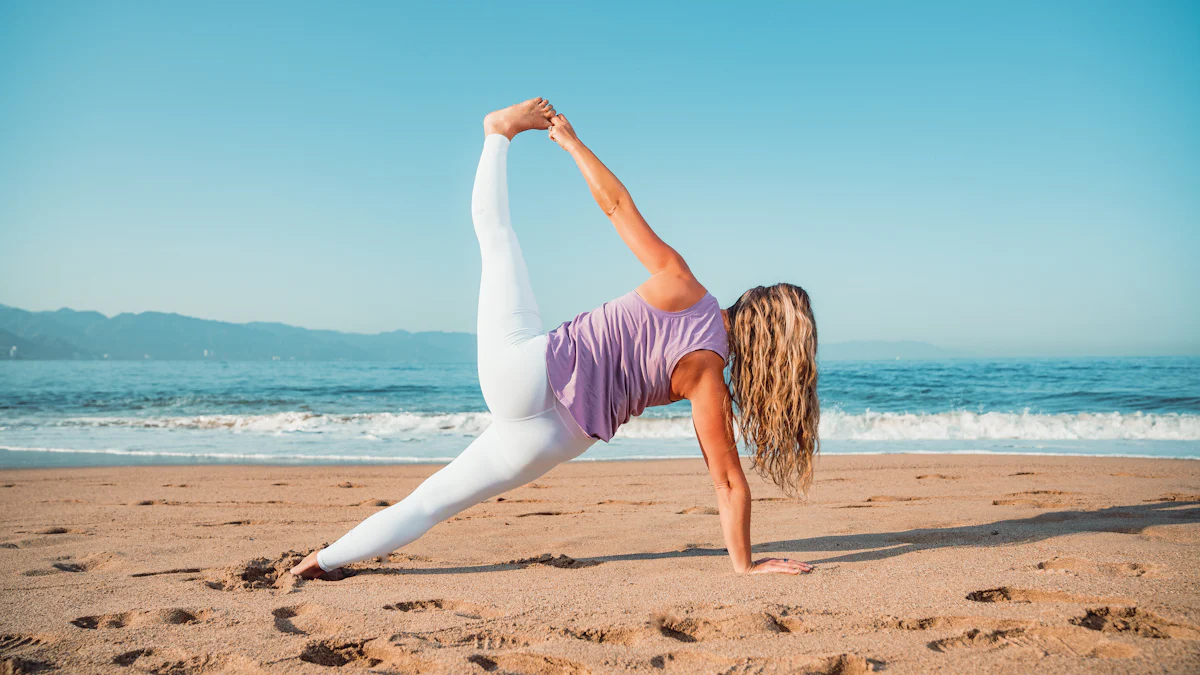
Mastering power yoga poses plays a crucial role in your physical and mental well-being. When you execute these poses effectively, you enhance your strength and flexibility. This improvement not only boosts your overall practice but also empowers you to tackle daily challenges with confidence. Research shows that regular practice can lead to greater muscle strength and endurance, making each session more rewarding. Embrace the journey of mastering these poses, and watch how they transform your body and mind.
Key Takeaways
-
Understand your body’s unique capabilities to avoid injury and enhance your practice.
-
Set clear intentions before each session to stay focused and grounded during your practice.
-
Incorporate strength training exercises into your routine to boost your power yoga performance.
-
Use props to support your alignment and deepen your stretches safely.
-
Establish a consistent practice schedule to see gradual improvements in strength and flexibility.
-
Prioritize warm-up and cool-down routines to prepare your body and aid recovery.
-
Reflect on your practice through journaling to track progress and set achievable goals.
Common Challenges in Power Yoga
Identifying Physical Limitations
Understanding your body’s capabilities
You need to know your body well. Each person has unique strengths and weaknesses. Take time to explore what your body can do. This awareness helps you avoid pushing too hard. Listen to your body during practice. If a pose feels uncomfortable, it might be a sign to modify or skip it. Remember, mastering power yoga poses takes time and patience.
Recognizing signs of strain
Pay attention to any signs of strain. Common indicators include sharp pain, excessive fatigue, or difficulty breathing. If you experience these, stop and reassess your position. You want to challenge yourself, but not at the cost of your health. Always prioritize safety over perfection.
Mental Barriers
Overcoming self-doubt
Self-doubt can creep in during your practice. You might think, "Am I doing this right?" or "I’ll never master this pose." Acknowledge these thoughts but don’t let them control you. Focus on your progress instead of comparing yourself to others. Celebrate small victories. Each time you step onto your mat, you take a step toward improvement.
Staying focused during practice
Staying focused can be tough, especially in a fast-paced class. Distractions can pull your mind away from your breath and movements. To combat this, set an intention before you start. It could be as simple as “I will stay present.” Use your breath as an anchor. When your mind wanders, gently bring it back to your breath. This practice enhances your overall experience.
Time Management
Finding time for practice
Finding time for power yoga can feel challenging. Life gets busy, and it’s easy to push your practice aside. Try scheduling your sessions like appointments. Even short practices can be effective. Aim for consistency rather than duration. A 20-minute session can be just as beneficial as a longer one.
Creating a consistent routine
Building a routine helps you stay committed. Choose specific days and times for your practice. Stick to this schedule as much as possible. Consistency leads to progress. You’ll notice improvements in your strength and flexibility over time. Plus, having a routine makes it easier to integrate power yoga into your daily life.
Techniques for Improving Pose Execution
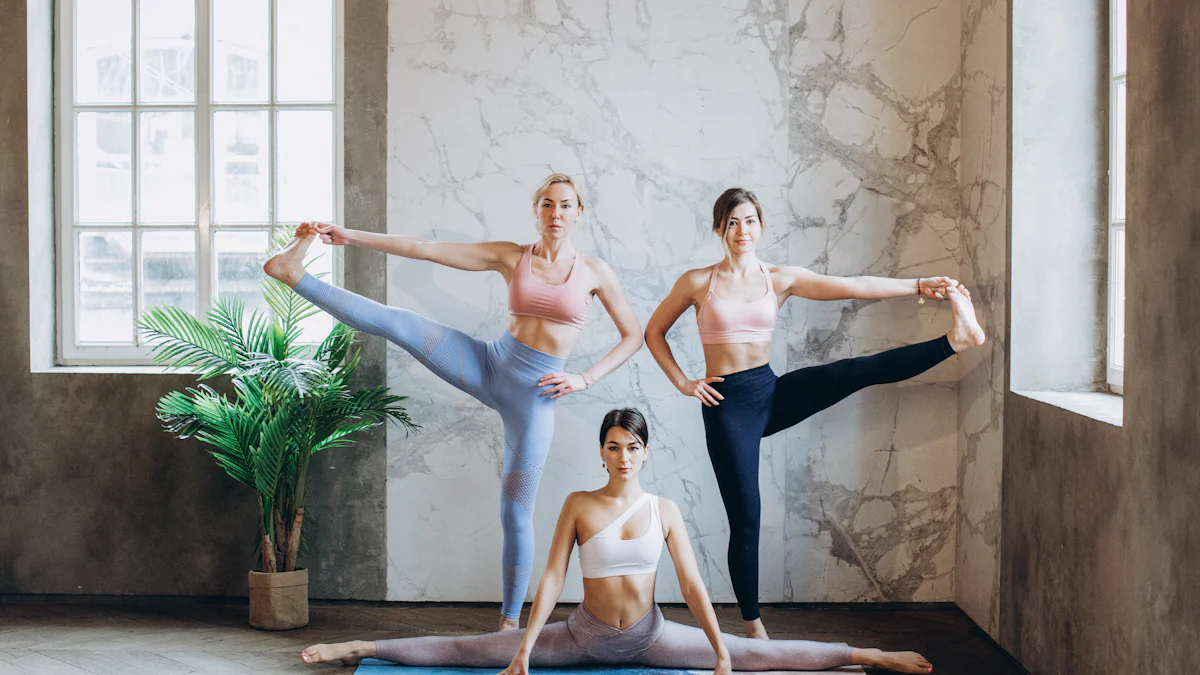
Image Source: pexels
Proper Alignment
Key alignment tips for major poses
Alignment matters in power yoga. It helps you avoid injuries and enhances the effectiveness of each pose. Start by focusing on your feet. For standing poses, ensure they are hip-width apart. Distribute your weight evenly. This foundation supports your entire body.
Next, pay attention to your spine. Keep it straight and elongated. Imagine a string pulling the crown of your head upward. This visualization helps maintain a neutral spine. In poses like Downward Dog, press your palms firmly into the mat. This action stabilizes your shoulders and aligns your body.
For seated poses, sit tall. Engage your core to support your back. This engagement allows you to deepen your stretches safely. Remember, proper alignment not only enhances your practice but also promotes body awareness.
Using props for support
Props can be your best friends in power yoga. They provide support and help you achieve better alignment. Use blocks under your hands in poses like Triangle or Half Moon. This adjustment allows you to maintain proper form without straining.
Straps can assist in poses that require flexibility. For example, in Forward Bend, loop a strap around your feet. This tool helps you reach further while keeping your back straight. Don’t hesitate to use blankets for extra cushioning. They can make seated poses more comfortable.
Breath Control
Incorporating breath into poses
Breath control is essential in power yoga. Your breath fuels your movements. Inhale deeply as you prepare to enter a pose. Exhale as you move into it. This rhythm creates a flow that connects your body and mind.
Try to synchronize your breath with your movements. For instance, during Sun Salutations, inhale as you raise your arms and exhale as you fold forward. This practice enhances your focus and keeps you grounded.
Techniques for maintaining breath awareness
Maintaining breath awareness can be challenging, especially in fast-paced classes. Start by counting your breaths. Inhale for a count of four, hold for a count of two, and exhale for a count of six. This technique calms your mind and keeps you present.
Another method is to visualize your breath. Imagine it flowing in and out of your body like a wave. This imagery helps you stay connected to your breath throughout your practice.
Gradual Progression
Starting with foundational poses
Begin your journey with foundational poses. These poses build strength and flexibility. Focus on mastering them before moving to advanced variations. Poses like Mountain, Warrior I, and Child’s Pose lay the groundwork for your practice.
As you become comfortable, gradually introduce more challenging poses. This progression prevents overwhelm and reduces the risk of injury.
Building up to advanced variations
Once you feel confident in foundational poses, explore advanced variations. For example, try transitioning from Warrior II to Extended Side Angle. This progression challenges your balance and strength.
Always listen to your body. If a pose feels too difficult, modify it. Use props or adjust your stance. Remember, mastering power yoga poses takes time. Celebrate your progress, no matter how small.
Enhancing Strength and Flexibility
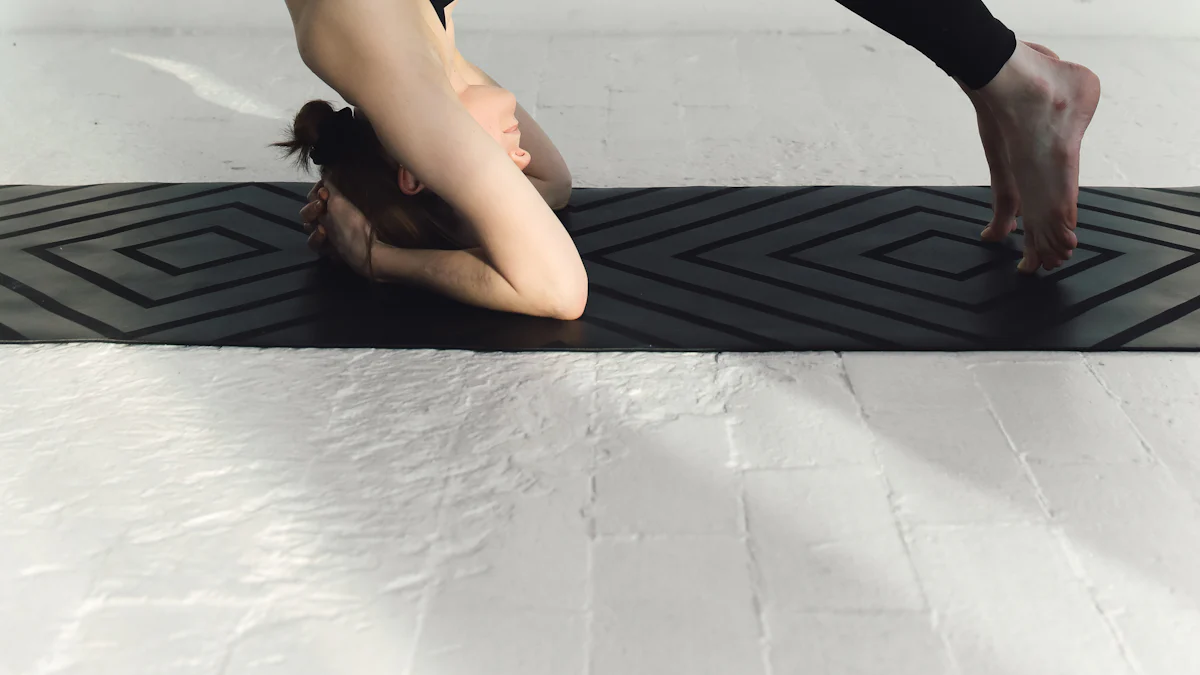
Image Source: pexels
Strength-Building Exercises
Incorporating strength training into your routine
You can boost your power yoga practice by adding strength training to your routine. This combination enhances your muscle strength and endurance. Focus on exercises that target major muscle groups. For instance, push-ups, squats, and lunges build strength in your arms, legs, and core. Aim for two to three strength training sessions each week. This approach not only improves your performance in power yoga poses but also helps prevent injuries.
Specific exercises to complement power yoga
Consider these specific exercises to complement your power yoga practice:
-
Plank: This exercise strengthens your core and arms. Hold the plank position for 30 seconds to a minute. Gradually increase the duration as you gain strength.
-
Deadlifts: Use a pair of dumbbells to perform deadlifts. This movement targets your back, glutes, and hamstrings. Start with lighter weights and focus on form.
-
Push-ups: These work your chest, shoulders, and triceps. Modify them by doing knee push-ups if needed. Aim for three sets of 10-15 repetitions.
Incorporating these exercises into your weekly routine can lead to significant improvements in your overall strength. Research shows that participants in yoga programs experience increased muscle strength and endurance after just eight weeks of practice.
Flexibility Techniques
Dynamic stretching before practice
Dynamic stretching prepares your body for power yoga. It increases blood flow to your muscles and enhances your range of motion. Try these dynamic stretches before your practice:
-
Arm circles: Stand tall and extend your arms out to the sides. Make small circles, gradually increasing the size. Do this for about 30 seconds.
-
Leg swings: Hold onto a wall for balance. Swing one leg forward and backward for 10-15 repetitions. Switch legs and repeat.
-
Torso twists: Stand with your feet hip-width apart. Twist your torso gently from side to side. This movement warms up your spine and core.
These stretches help you move more freely during your power yoga poses. They also reduce the risk of injury by preparing your muscles for activity.
Static stretching post-practice
After your power yoga session, static stretching helps improve flexibility. Hold each stretch for 15-30 seconds. Focus on areas that feel tight. Here are some effective static stretches:
-
Seated forward bend: Sit with your legs extended. Reach for your toes while keeping your back straight. This stretch targets your hamstrings and lower back.
-
Child’s pose: Kneel on the mat and sit back on your heels. Extend your arms forward and relax your forehead on the ground. This pose stretches your back and shoulders.
-
Cobra pose: Lie on your stomach and place your hands under your shoulders. Press up gently, lifting your chest while keeping your hips grounded. This stretch opens up your chest and strengthens your spine.
Regularly practicing these static stretches can lead to greater flexibility over time. Studies show that yoga participants experience significant improvements in flexibility after consistent practice.
The Importance of Warm-Up Routines
Preparing the Body
Effective warm-up sequences
Warming up before your power yoga practice sets the stage for a successful session. Start with gentle movements to increase blood flow and loosen your muscles. Here’s a simple warm-up sequence you can follow:
-
Neck Rolls: Gently roll your head in circles to release tension.
-
Shoulder Shrugs: Lift your shoulders towards your ears and then drop them down.
-
Cat-Cow Stretch: On all fours, alternate between arching your back and dropping your belly. This movement warms up your spine.
-
Sun Salutations: Flow through a few rounds of Sun Salutations to engage your entire body.
These warm-up exercises prepare your muscles and joints for the demands of power yoga. They help you move more freely and reduce the risk of injury.
Benefits of warming up
Warming up offers numerous benefits. Research shows that a proper warm-up can improve performance in 79% of physical activities. When you warm up, you increase your heart rate and circulation. This process delivers more oxygen to your muscles, enhancing their efficiency.
Additionally, warming up helps improve your flexibility. It allows your muscles to stretch more easily, making it easier to achieve deeper poses. You’ll also notice that warming up mentally prepares you for your practice. It creates a smooth transition from your daily activities to your yoga session.
Mental Preparation
Setting intentions for your practice
Before you step onto your mat, take a moment to set an intention. This intention acts as a guiding principle for your practice. It could be something simple like “I will focus on my breath” or “I will embrace my progress.”
Setting an intention helps you stay grounded during your practice. It reminds you of your goals and keeps distractions at bay. You might even find that your intention evolves as you practice. Embrace this journey of self-discovery.
Mindfulness techniques before starting
Incorporating mindfulness techniques can enhance your power yoga experience. Start by taking a few deep breaths. Inhale deeply through your nose, filling your lungs, and exhale slowly through your mouth. This practice calms your mind and centers your thoughts.
You can also visualize your practice. Picture yourself flowing through each pose with ease and grace. This visualization helps you connect with your body and prepares you for the movements ahead.
By prioritizing both physical and mental warm-ups, you set yourself up for a fulfilling power yoga session. Embrace these routines, and watch how they elevate your practice.
The Role of Cool-Down Routines
Recovery Techniques
Gentle stretches to cool down
After an intense power yoga session, your body deserves some gentle stretches. These stretches help your muscles relax and recover. Try these simple moves:
-
Seated Forward Bend: Sit with your legs extended. Reach for your toes while keeping your back straight. This stretch eases tension in your hamstrings and lower back.
-
Reclined Spinal Twist: Lie on your back and bring one knee to your chest. Let it fall across your body to the opposite side. This twist releases tightness in your spine and hips.
-
Happy Baby Pose: Lie on your back and grab the outer edges of your feet. Gently pull your knees toward your armpits. This pose opens your hips and calms your mind.
These gentle stretches not only cool down your body but also promote relaxation. Research shows that cooldowns can reduce delayed onset muscle soreness. They increase circulation and help remove waste from your muscles. So, take a few minutes to unwind after your practice.
Importance of relaxation post-practice
Relaxation plays a vital role in your recovery. After pushing your body during power yoga, allow yourself to rest. This time helps your muscles recover and prepares you for your next session.
You might consider lying in Savasana (Corpse Pose) for a few minutes. Close your eyes and focus on your breath. Feel the ground beneath you and let go of any tension. This practice calms your nervous system and promotes overall well-being.
Studies indicate that cooldown exercises impact how your body functions for hours after your workout. They can even affect how you feel the next day. Prioritizing relaxation can lead to better performance in your future practices.
Reflecting on Your Practice
Journaling your experience
Taking time to reflect on your practice can enhance your growth. Consider keeping a yoga journal. Write down your thoughts, feelings, and experiences after each session. This practice helps you track your progress and identify areas for improvement.
You might jot down:
-
What poses felt good or challenging
-
Any insights or breakthroughs you experienced
-
Goals for your next practice
Journaling allows you to celebrate your achievements and stay motivated. It also helps you connect with your journey and understand your body better.
Assessing progress and setting goals
Regularly assessing your progress keeps you on track. Take a moment to evaluate how far you’ve come. Notice improvements in your strength, flexibility, and confidence.
Set specific, achievable goals for your practice. For example, aim to hold a challenging pose for a longer duration or master a new variation. Break these goals into smaller steps. This approach makes them more manageable and less overwhelming.
Remember, progress takes time. Celebrate each small victory along the way. By reflecting on your practice and setting goals, you create a roadmap for your yoga journey. Embrace the process, and enjoy every step of the way!
Mastering power yoga poses involves understanding key techniques like proper alignment, breath control, and gradual progression. Implement these strategies to enhance your practice and experience the benefits of increased strength and flexibility. Remember, every small step counts on your journey.
Feel free to share your experiences and progress with others. Your insights can inspire fellow practitioners. Embrace the journey, and enjoy the transformation that comes with consistent practice!
FAQ
What Is Power Yoga?
Power yoga combines both strengthening and lengthening poses. This approach promotes improved posture and enhances your body awareness and control. You’ll notice greater stability and balance as you practice.
How Often Should I Practice Power Yoga?
Aim for at least two to three sessions each week. Consistency is key. Even short practices can yield significant benefits. Listen to your body and adjust your frequency based on how you feel.
Do I Need to Be Flexible to Start Power Yoga?
Not at all! Power yoga welcomes practitioners of all flexibility levels. You’ll gradually improve your flexibility through regular practice. Focus on your progress rather than comparing yourself to others.
Can Power Yoga Help with Weight Loss?
Yes, power yoga can aid in weight loss. The combination of strength and cardio elements burns calories effectively. Pair your practice with a balanced diet for optimal results.
What Should I Wear for Power Yoga?
Choose comfortable, breathable clothing that allows for movement. Look for moisture-wicking fabrics to keep you dry. Avoid overly loose clothing, as it may get in the way during poses.
How Can I Improve My Balance in Power Yoga?
Practice balancing poses regularly. Start with foundational poses like Tree Pose or Warrior III. Focus on your breath and engage your core. Over time, you’ll notice improvements in your balance.
Is It Normal to Feel Sore After Power Yoga?
Yes, feeling sore is common, especially if you’re new to power yoga. Your muscles work hard during practice. Ensure you warm up properly and cool down afterward to minimize soreness.
Can I Practice Power Yoga If I Have an Injury?
Consult your doctor or a qualified instructor before practicing with an injury. They can guide you on modifications. Listen to your body and avoid poses that cause pain.
What Are Some Good Resources for Learning Power Yoga?
Consider online classes, local studios, or instructional books. Many platforms offer free resources. Find what resonates with you and fits your learning style.
How Can I Stay Motivated to Practice Regularly?
Set specific goals for your practice. Track your progress in a journal. Join a community or find a practice buddy. Celebrate your achievements, no matter how small.
See Also
A Comprehensive Guide to Perfecting the Plank Pose
Achieving Excellence in the Downward Dog Pose
Your Ultimate Guide to Conquering Yoga Asanas