
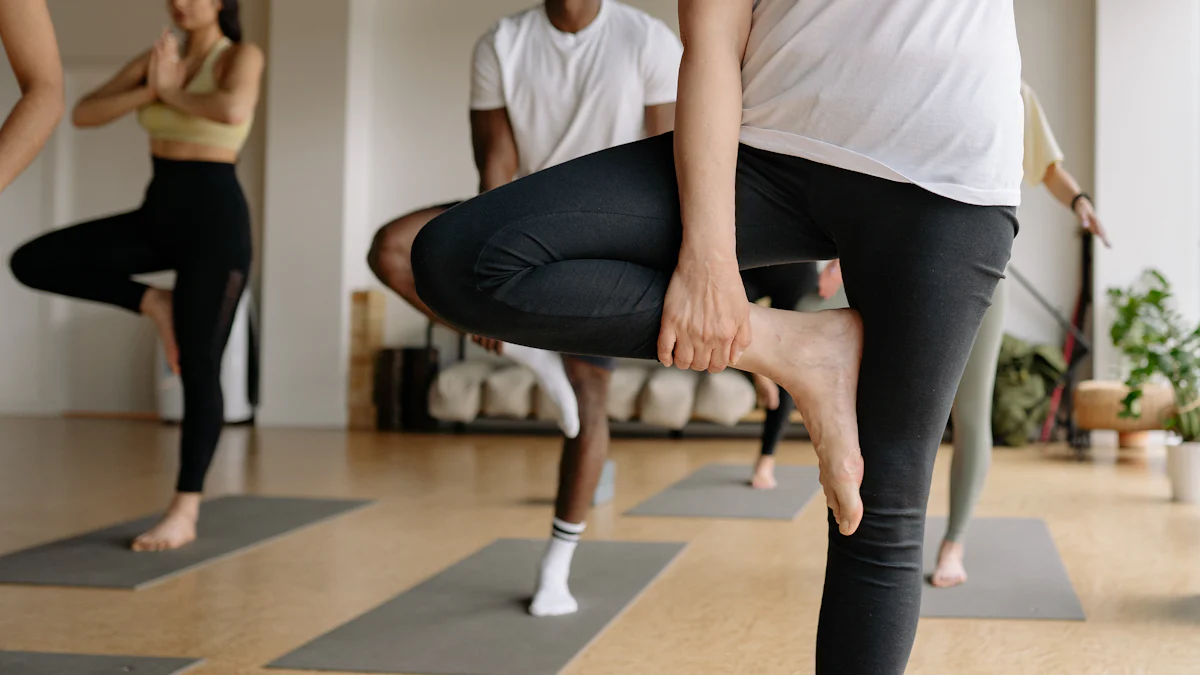
Image Source: pexels
The correct article choice for 'yoga' in German plays a crucial role. Many people in Germany practice yoga. 16 percent of the population has already had yoga experience. Choosing the right article, such as der Yoga, influences understanding and communication. Precise articulation helps avoid misunderstandings and clearly convey the meaning of yoga. The increasing popularity of yoga in Germany demonstrates how important it is to use language correctly to effectively communicate the practice and its benefits.
Image source: pexels ...The correct article choice for 'yoga' in German plays a crucial role. Many people in Germany practice yoga. 16 percent of the population has already gained yoga experience. Choosing the correct article, such as der Yoga, influences understanding and communication. Precise articulation helps to avoid misunderstandings and clearly convey the meaning of yoga.] ## The definite article for 'Yoga'
The definite article
Use of 'das Yoga'
In German, 'Yoga' is often used with the definite article 'das'. This form emphasizes the practice as a concept or discipline. Many people in Germany practice das Yoga to reduce stress and improve physical fitness. Studies show that yoga can help with stress-related symptoms and back pain. The use of 'das Yoga' is particularly common in formal and written contexts.
Use of 'der Yoga'
Although less common, 'der Yoga' is also used. This form may occur in certain dialects or regions. 'Der Yoga' is often used in informal conversations when discussing specific yoga styles or techniques. For example, someone might say, "The yoga I practice helps me improve my lung function." This statement refers to the positive effects of breathing techniques in yoga, which can help with post-COVID syndrome symptoms.
The Indefinite Article
Using 'a yoga'
The indefinite article 'a' is less commonly used with 'yoga'. 'A yoga' could be used to describe a specific type or form of yoga that someone practices. For example, "A yoga I've tried has improved my flexibility." This phrasing highlights the diversity of yoga practices and shows that there are many different approaches that can offer varying benefits.
The Indefinite Article
Using 'a yoga'
The indefinite article 'a' is less frequently used with 'yoga'. 'A yoga' could be used to describe a specific type or form of yoga that someone practices. For example, 'A yoga I've tried has improved my flexibility.' This phrasing emphasizes the diversity of yoga practices and shows that there are many different approaches that can offer different benefits.
The indefinite article 'a yoga' is less common with 'yoga'. ## Declension of 'Yoga' in the Nominative Case
Singular Form
In German, the noun 'Yoga' is declined in the nominative singular as 'das Yoga'. This form is frequently used to describe the practice as a general concept. For example, one might say: "Das Yoga fördern die Entspannung" (The yoga promotes relaxation). Here, 'Yoga' is considered a neutral, general practice that has positive effects on well-being. In certain contexts, 'der Yoga' can also be used, especially when specific styles or techniques are emphasized. An example of this would be: "Der Yoga, den sie praxisziert, ist besonders dynamik" (The yoga she practices is particularly dynamic). This usage highlights the diversity of yoga practices.
Plural Form
In the nominative plural, 'Yoga' remains unchanged. There is no specific plural form for 'yoga,' meaning it is used in the plural in the same way as in the singular. This is typical for many nouns that describe concepts or practices. A sentence might read: "Many people in Germany practice yoga." Here, 'yoga' is used as a collective term for various practices and styles performed by a wide range of people. This flexibility in declension facilitates communication about the different aspects and benefits of yoga.
Declension of 'yoga' in the genitive case
Singular form
In the genitive singular, 'yoga' is declined as des Yoga or des Yogas. This form is often used in formal contexts to express possession or belonging. For example, one might say: "The benefits of yoga are manifold." Here, 'yoga' is considered the source of the benefits. The use of the genitive case emphasizes the relationship between yoga and the positive effects it can have on the body and mind.
Declension of 'yoga' in the genitive case
Singular form
In the genitive singular, 'yoga' is declined as des Yoga or des Yogas. This form is frequently used in formal contexts to express possession or belonging. For example, one might say: "The benefits of yoga are manifold." Here, 'yoga' is considered the source of the benefits. The use of the genitive case emphasizes the relationship between yoga and the positive effects it can have on the body and mind.
Another example could be: "The philosophy of yoga teaches mindfulness." In this sentence, the philosophy is highlighted as an essential component of yoga. The genitive case indicates the connection between the practice and its underlying principles.
Plural Form
In the plural, 'yoga' remains unchanged in the genitive case. There is no specific plural form for 'yoga,' meaning it is used in the plural in the same way as in the singular. A sentence could read: "The techniques of yoga are diverse." Here, 'yoga' is used as a collective term for various practices and styles practiced by a wide range of people. This flexibility in declension facilitates communication about the different aspects and benefits of yoga.
Plural Form
In the plural, 'yoga' remains unchanged in the genitive case. There is no specific plural form for 'yoga,' meaning it is used in the plural in the same way as in the singular. Note: Some prepositions require the genitive case, such as 'angesichts des Yoga'. These prepositions help to define the relationship between yoga and other concepts or situations more clearly.
Declension of 'Yoga' in the Dative Case
Singular Form
In the dative singular, 'yoga' is declined as dem Yoga. This form is frequently used to establish a connection to a specific context or situation. For example, one might say: "Mit dem Yoga finde ich innere Ruhe" (With yoga, I find inner peace). Here, 'yoga' is considered a means to achieve a state of serenity. The dative case emphasizes the relationship between the practice and its individual benefit.
Another example could be: "Ich beschäftige mich intensiv mit dem Yoga" (I am intensively engaged with yoga). In this sentence, the intensive engagement with the practice is emphasized. The dative case shows the connection between the person and the activity they are performing.
Note: Some prepositions require the use of the dative case, such as 'bei dem Yoga' or 'von dem Yoga'. These prepositions help to define the relationship between yoga and other concepts or situations more clearly.
Plural Form
In the dative plural, 'yoga' remains unchanged. There is no specific plural form for 'yoga,' meaning it is used in the plural in the same way as in the singular. A sentence might be: "With yoga exercises, I improve my flexibility." Here, 'yoga' is used as a collective term for various exercises practiced by a wide range of people. This flexibility in declension facilitates communication about the different aspects and benefits of yoga.
Plural Form
In the dative plural, 'yoga' remains unchanged. The use of the dative case in the plural shows the relationship between the exercises and the positive effects they can have on the body. Yoga offers a variety of techniques that can be individually adapted to meet specific needs.
Declension of 'Yoga' in the Accusative Case
Singular Form
In the accusative singular, the noun 'Yoga' is declined as 'den Yoga'. This form is used when 'Yoga' is the direct object in a sentence. For example, one might say: "I practice yoga daily." Here, 'Yoga' is considered the activity being performed. The use of the accusative case emphasizes the action and shows that 'Yoga' is the goal of the practice.
Another example could be: "He loves yoga because it helps him relax." In this sentence, the preference for 'yoga' is emphasized, and the accusative case indicates the relationship between the person and the practice they value.
Note: The accusative case is often used with certain verbs that express a direct action or goal, such as 'to practice', 'to love', or 'to enjoy'.
Plural Form
In the plural, 'yoga' remains unchanged in the accusative case. There is no specific plural form for 'yoga', meaning it is used in the plural in the same way as in the singular. A sentence might read: "Many people in Germany practice yoga." Here, 'yoga' is used as a collective term for various practices and styles practiced by a wide range of people. This flexibility in declension facilitates communication about the different aspects and benefits of yoga.
Using the accusative case in the plural indicates the relationship between the practices and the positive effects they can have on the body. Yoga offers a variety of techniques that can be individually adapted to meet specific needs.
Common Mistakes and Misunderstandings

Image Source: unsplash
Incorrect Article Choice
Many people make mistakes when choosing the correct article for yoga. Some use "der Yoga" (masculine) in situations where "das Yoga" (neuter) would be more appropriate. This confusion can lead to misunderstandings. For example, someone might say, "Der Yoga ist gut für die Gesundheit" (The yoga is good for health). In this case, "das Yoga" (neuter) would be more correct, as it refers to the practice as a whole. Choosing the correct article is crucial for clearly conveying the meaning.
Incorrect Article Choice
Incorrect Article Choice
Incorrect Article
Incorrect Article
Incorrect Article
` ... Another common mistake is changing the article when discussing different styles of yoga. Sometimes you hear, "The yoga I do is relaxing." Here, you should use "das Yoga" (the yoga) to emphasize the practice as a concept. Correct article usage helps to better understand the diversity of yoga practices.
Incorrect Declension
The declension of yoga poses a challenge for many. Some use the incorrect genitive form, such as "die Nutzen des Yogas" (the benefits of yoga) instead of "die Vorteil des Yoga" (the benefits of yoga). These errors can impair clarity of communication. Correct declension is important to clarify the relationship between yoga and its benefits.
Another common mistake occurs in the dative case. You often hear, "Ich beschäftige mich mit den Yoga" (I am occupied with yoga). Here, it should be "mit dem Yoga" (with the yoga). Correct declension in the dative case shows the connection between the person and the practice. This precision in language improves understanding and communication about yoga.
The correct article choice and declension of 'yoga' in German is crucial for clear communication. **The word 'yoga' can be used in both masculine and neuter forms, demonstrating the flexibility of the language. Correct application of these rules improves understanding and avoids misunderstandings. Precise language facilitates the effective communication of the benefits of yoga.
Tip: Regular practice and application in everyday life help solidify language skills and foster a deeper understanding of the diversity of yoga practices.
Tip: ## See also
Tips for Choosing Sustainable Yoga Products
Your Ultimate Guide to Yoga in Zurich
Essential Yoga Equipment for Your Practice

Written by
Maria Yogalife
Maria | Yoga & Wellness Writer at YogaLife.World Maria is a passionate yoga and wellness writer at YogaLife.World, dedicated to sharing knowledge, inspiration, and practical guidance for a healthier, more balanced lifestyle. Through her articles, she explores yoga practices, meditation, mindfulness, holistic wellness, and the transformative benefits of mindful living. With an accessible and inspiring approach, Maria helps readers of all levels discover new practices, deepen their understanding of yoga, and bring greater balance, awareness, and well-being into their everyday lives.
Visit website


