
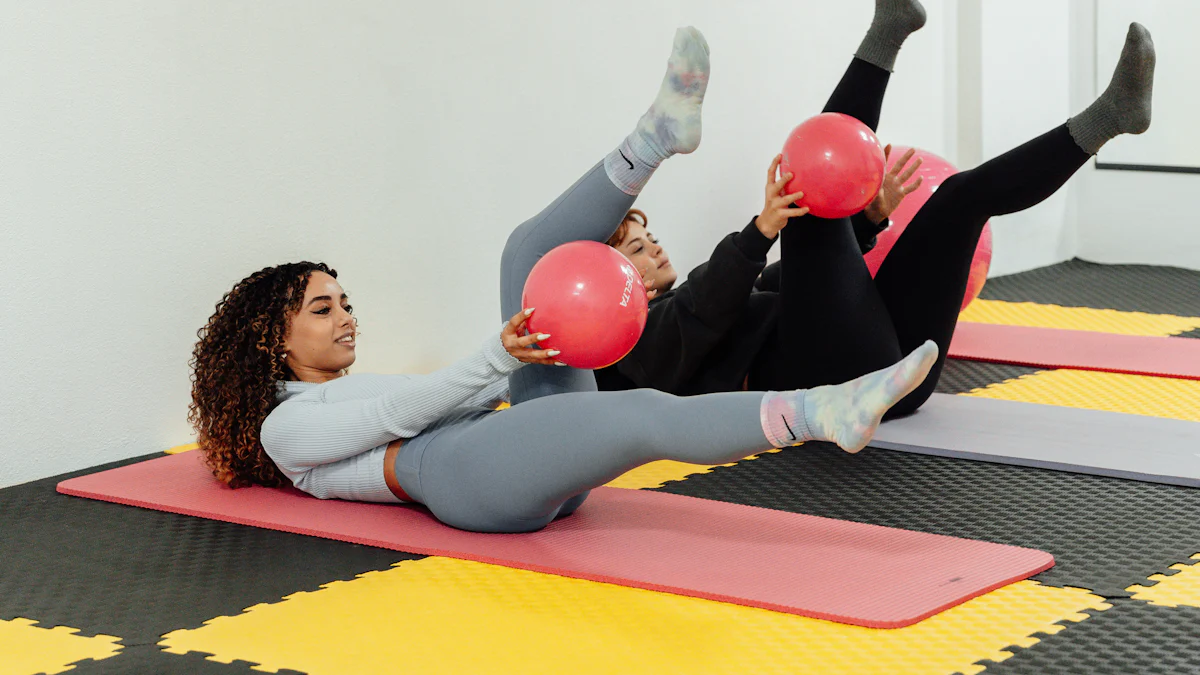
Comparison of the Best Yoga Mats for Children
Comparison of the Best Yoga Mats for Children 2024
Image Source: pexels
Yoga offers numerous benefits for children, notably improving their concentration and increasing their flexibility. In France, the number of practitioners has tripled in the last ten years, highlighting the growing appeal of this discipline. With their growing popularity, children's yoga mats are becoming essential for ensuring a safe and comfortable practice. This comparison will help you choose the best mat for your child, taking into account criteria such as safety, comfort, and design.
Selection Criteria for Children's Yoga Mats
Materials and Durability
Types of Materials Used
When choosing a yoga mat for your child, the material is crucial. Mats made of natural rubber are popular for their natural grip. They are also soft to the touch, making them pleasant for children. Another eco-friendly option is cork, which is renewable and biodegradable. This material offers a non-slip surface and is naturally resistant to microorganisms, making it ideal for children with sensitive skin.
Durability and Resistance
Durability is essential for a children's yoga mat. You want a mat that can withstand daily wear and tear. Mats like those from Nolavea are known for their robustness. They combine materials such as non-slip PVC and natural jute fiber, ensuring a long lifespan. A durable mat will withstand even the most energetic yoga sessions without deteriorating.
Comfort and Safety
Thickness and Cushioning
The thickness of the mat plays a key role in comfort. A mat with extra-thick padding, like the premium cork model, offers excellent cushioning. This protects your child's joints during poses. A thickness of around 5 mm is often ideal, providing a good balance between comfort and stability.
Grip and Stability
Your child's safety is paramount. A mat with good grip prevents slips. Materials like natural rubber and cork are naturally non-slip. They ensure stability even when the mat is wet. This allows your child to focus on their poses without fear of falling.
Design and Aesthetics
Colors and Patterns
Children love bright colors and fun patterns. Choose a mat that catches your child's eye. Nolavea yoga mats, for example, are available in a variety of styles and colors. An attractive design can make yoga practice more engaging for children.
Customization Available
Some mats offer customization options. You can choose specific patterns or colors that appeal to your child. This could include cartoon characters or inspirational designs. A personalized mat can become a special companion for your child, making each yoga session unique and personal.
Comparison of the Best Yoga Mats for Kids 2024
Comparison of the Best Yoga Mats for Kids 2024
Image Source: pexels
Buki Kids Yoga Mat
Key Features
The Buki kids yoga mat stands out with its colorful and attractive design, perfect for capturing the attention of young children. Made of TPE, an environmentally friendly material, it offers excellent grip and optimal comfort. This mat measures approximately 150 cm long and 60 cm wide, an ideal size for children. Its 5 mm thickness ensures good cushioning, protecting joints during yoga poses.
Advantages and Disadvantages
Advantages:
-
Exceptional Grip: The TPE material ensures a non-slip surface, even when sweaty.
-
Playful Design: The colorful patterns encourage children to practice yoga with enthusiasm.
-
Lightweight and Easy to Carry: Children can roll it up and carry it effortlessly.
Disadvantages:
-
Limited Durability: While comfortable, TPE can wear out faster than other, more robust materials.
-
Limited Customization: Customization options are limited compared to other brands.
Nature & Découvertes Children's Yoga Mat
Key Features
The Nature & Découvertes children's yoga mat is designed for environmentally conscious parents. Made from natural cork, it offers a non-slip surface and is naturally resistant to microorganisms. This mat is slightly thicker, providing added comfort. Its dimensions are similar to those of the Buki mat, suitable for children.
Advantages and Disadvantages
Advantages:
-
Eco-friendly: Cork is a renewable and biodegradable material.
-
Superior Comfort: The extra thickness provides better cushioning for yoga poses.
-
Natural Durability: Cork is resistant to moisture and bacteria.
Disadvantages:
-
Weight: Cork can be heavier, making it a little more difficult for children to carry.
-
Price: This mat may be more expensive due to its eco-friendly materials.
Eco-Friendly Children's Yoga Mat
Key Features
The Eco-Friendly Children's Yoga Mat focuses on sustainability and respect for the environment. Made from recycled materials, it combines natural rubber and jute fibers. This mat offers excellent grip and exceptional durability, ideal for even the most energetic yoga sessions.
Pros and Cons
Pros:
-
Durability: The materials used guarantee a long lifespan.
-
Environmentally Friendly: The use of recycled materials reduces its environmental footprint.
-
Stability: Natural rubber ensures perfect grip.
Cons:
-
Simple Design: Fewer choices in terms of colors and patterns.
-
Maintenance: May require more frequent cleaning to maintain its quality.
By comparing these mats, you can choose the one that best meets your child's needs, taking into account grip, comfort, and environmental impact. Each children's yoga mat has its own advantages, and the choice will depend on your family's priorities.
Buying Guide for Parents
Image Source: pexels
Choosing the right yoga mat for your child can seem complicated, but by considering a few key factors, you can make an informed choice that will meet your child's needs.
Factors to Consider When Buying
Budget and Value for Money
When buying a yoga mat for your child, budget is often a deciding factor. You need to assess the value for money. A cheaper mat may seem appealing, but it might not offer the necessary durability or comfort. Investing in a quality mat can prove more economical in the long run. Consider comparing the prices and features of different models to find the one that offers the best balance between cost and quality.
Specific Needs of Your Child
Every child is unique, and their needs can vary. Consider your child's height and weight. A thicker mat may be necessary for a heavier child, providing better cushioning. If your child has sensitive skin, opt for hypoallergenic materials like cork. Aesthetic preferences also play a role. A mat with fun designs can encourage your child to practice yoga regularly.
Mat Care Tips
Cleaning and Maintenance
Proper care extends the life of your child's yoga mat. Clean it regularly with a damp cloth and mild soap. Avoid harsh chemicals that could damage the material. For cork mats, dry cleaning is often sufficient. Make sure the mat is completely dry before rolling it up to prevent mold growth.
Storage and Transport
Proper storage of your mat is essential. Roll it up rather than folding it to avoid permanent creases. Store it in a dry place away from direct sunlight. For transport, choose a lightweight mat that is easy to roll up. Some models come with a carrying strap, making it easier for your child to move the mat.
By following these tips, you can choose a children's yoga mat that not only meets your child's needs but is also easy to care for and transport. This ensures a pleasant and safe yoga experience for your little yogi.
FAQs on Children's Yoga Mats
Frequently Asked Questions
What is the best thickness for a children's yoga mat?
When choosing a children's yoga mat, the thickness plays a crucial role. A thickness of 5 mm is often recommended, as it offers a good balance between comfort and stability. However, some prefer a slightly thicker mat, such as 6 mm, for greater comfort. This protects your child's knees, hands, and joints during poses. A thicker mat can be especially beneficial for beginners, as it provides better cushioning.
How to choose a mat suitable for your child's age?
Choosing the right yoga mat for a child depends on several age-related factors. For younger children, a non-slip and lightweight mat is essential. For example, the Buki children's yoga mat is designed for children aged 4 to 12. It's non-slip and easy to carry, allowing your child to take it everywhere, whether to a friend's house or on a trip. For older or more experienced children, a 3mm natural rubber mat might be ideal. It offers good grip while remaining easy to transport. Also, make sure the mat is the right size, usually around 150 cm long, to suit your child's height.
In short, choosing the right yoga mat for your child depends on essential criteria such as safety, comfort, and design. Here are some recommendations to guide you:
-
Opt for durable materials: Natural rubber and cork offer excellent grip and are environmentally friendly.
-
Consider the thickness: A 5 mm thick mat provides good cushioning to protect your child's joints.
-
Choose an attractive design: Bright colors and fun patterns can make practicing yoga more engaging.
Remember that yoga is a beneficial activity for your child's physical and emotional development. Encourage him to practice regularly to improve his concentration, coordination, and emotional regulation. Sharing these yoga moments with your child can also strengthen your bond and offer a moment of relaxation and connection.
See also
Wall Yoga Techniques for Optimal Flexibility
Tips for Choosing the Perfect Yoga Outfit for Women
The 10 Best Yoga Outfits for Women in 2023
The 10 Essential Yoga Outfit Brands
Yoga Albi: Tips for Finding Your Class
Yoga Albi: Tips for Finding Your Class Perfect! (https://yogalife.world/blog/yoga-albi-comment-trouver-votre-cours-ideal/)



